
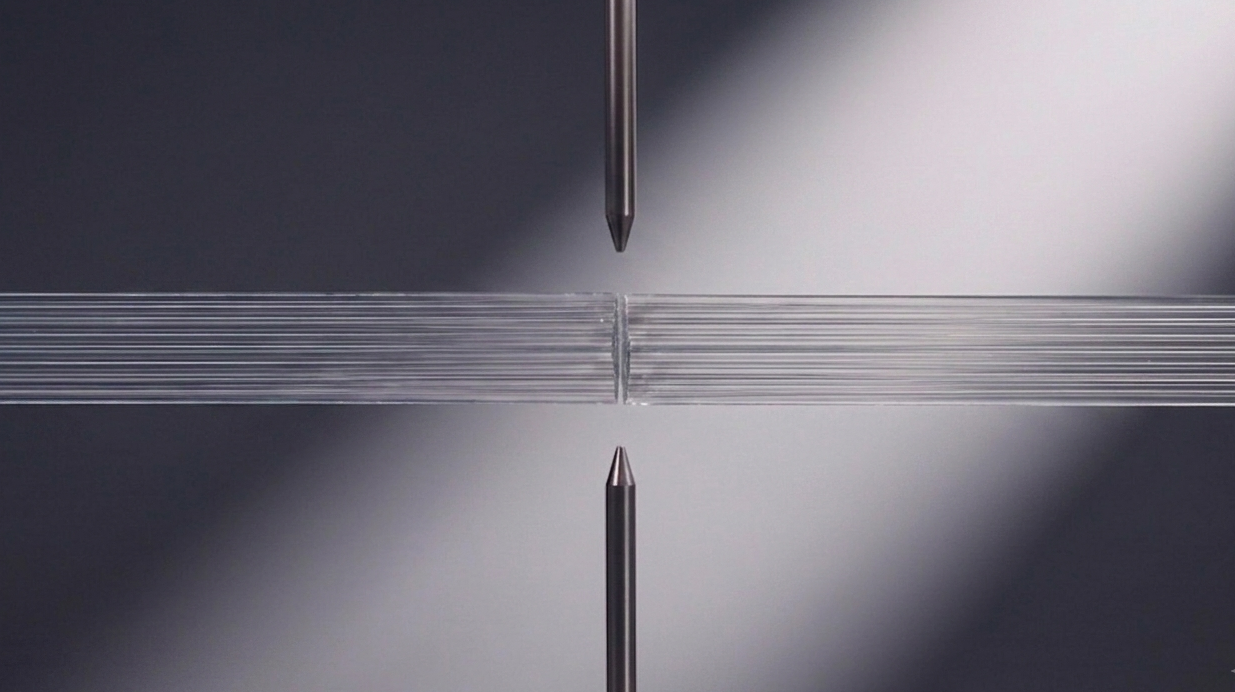
Fibre built end to end.
Outside plant, inside plant, and network upgrades — placed and spliced by our own crews.
Overview
One point of contact.
3K Solutions builds and maintains the physical fibre optic network for telecom carriers — everything between the central office and the customer. Our crews handle the work directly, without subcontracted layers between the bid and the build.
Outside Plant Construction
Outside plant construction refers to the fibre network built outdoors, connecting a carrier's central office to the homes, businesses, and cell sites it serves. It takes two forms:
Aerial construction — fibre lashed to existing utility poles, used where pole access already exists along a route.
Underground construction — cable placed in buried conduit or direct-buried using trenching or directional boring, typically used where aerial isn't permitted or practical.
Inside Plant Installation
Inside plant installation covers the fibre work inside a building or facility, including central offices, equipment rooms, and points of presence. This includes fibre placement, termination, and connectivity between racks and equipment, tested to the same standard as outside plant work.
Network Upgrades & Maintenance
Existing fibre networks need two different kinds of ongoing attention.
Maintenance is reactive — locating and repairing fibre breaks caused by construction damage, weather, or age, and restoring service when a fault takes a route down.
Upgrades are proactive — adding capacity along an existing route, replacing aging cable, or extending a network segment to reach new customers as demand grows.
Cell Tower & Small Cell Connectivity
Wireless networks depend on fibre just as much as wired ones. Every cell tower and small cell site needs a fibre connection back to the carrier's core network — commonly called backhaul — since a site can only carry as much traffic as its backhaul connection supports.
Macro cell towers typically need one high-capacity connection each. Small cell sites, used to densify coverage in urban areas, need many more individual connections spread across a smaller footprint, often mounted on streetlights or utility poles rather than towers.
5G Backhaul Construction
5G networks move significantly more data than earlier wireless generations, which means the backhaul connecting a 5G site has to carry more capacity than what previous generations required. In dense urban deployments especially, this often means building new fibre routes to sites that didn't previously need one, or upgrading existing routes to handle the added load.
Get in touch
Tell us about the build.
Send scope, timeline, and location — we'll follow up within one business day.